Nutrition
How to Spread Protein Across the Day for Muscle and Recovery
By MyFitnessGrowth Editorial Team · 2026-10-08 · 6 min read
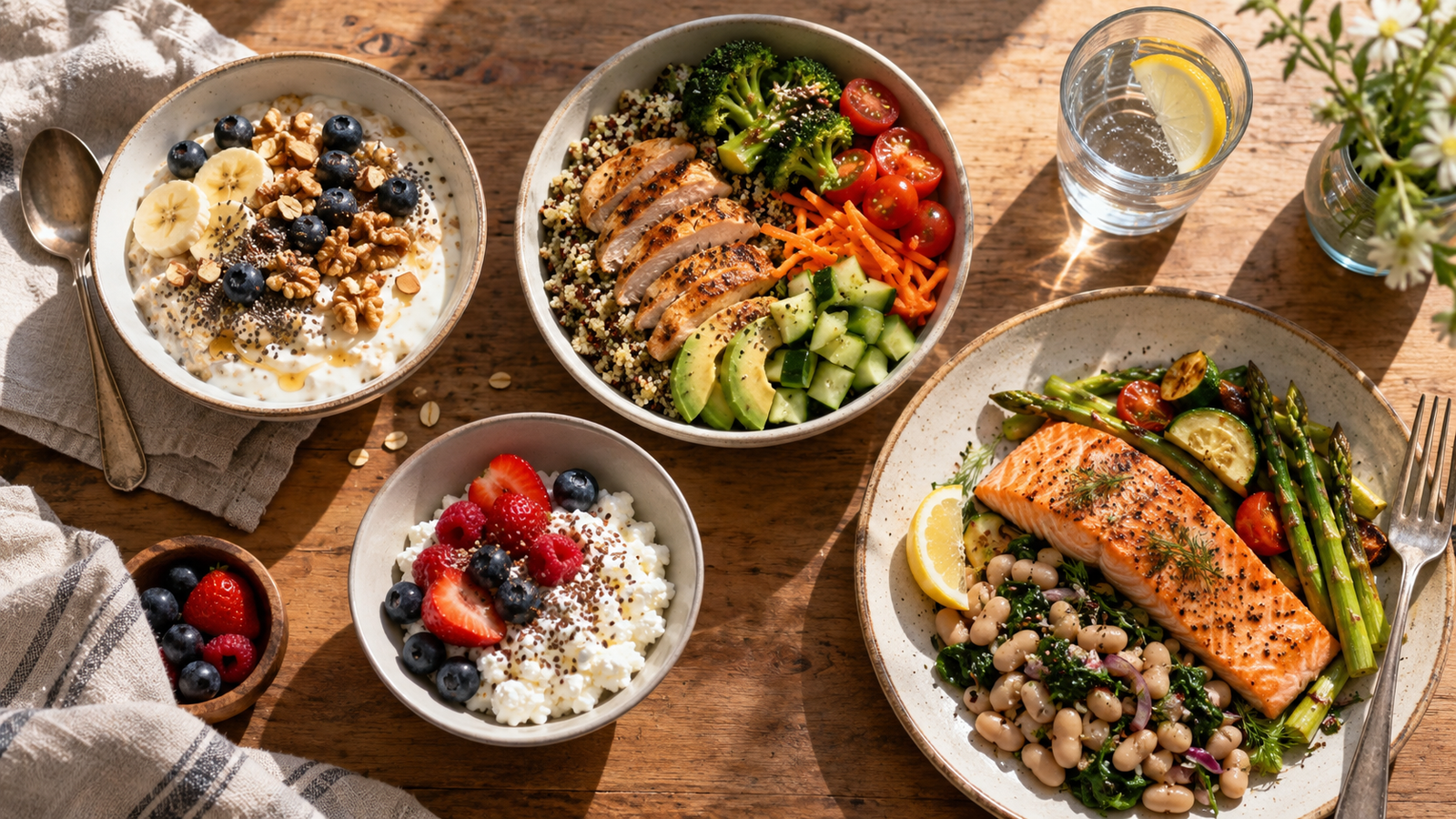
Total daily protein matters, but distribution can make a good plan easier to follow. Rather than saving nearly all protein for dinner, include a useful source at several meals. This supports regular opportunities for muscle repair and usually improves fullness.
Start With Your Daily Target
Protein needs depend on body size, training, age, energy intake and medical circumstances. Many active adults use a range around 1.2–1.6 grams per kilogram of body weight per day, while some strength-focused plans use more. This is a general planning range, not a prescription. People with kidney disease, pregnancy, eating-disorder history or other clinical needs should seek individualized advice.
Divide It Into Three or Four Eating Times
Once you have an appropriate daily target, divide it across three or four meals. Someone targeting 120 grams might plan roughly 30 grams at breakfast, lunch, dinner and one snack. Exact symmetry is unnecessary. The goal is to avoid a pattern where breakfast and lunch contain very little protein and dinner carries almost everything.
Practical Protein Portions
- Greek yogurt with oats and fruit
- Eggs plus egg whites with whole-grain toast
- Chicken, fish, tofu or beans in a grain bowl
- Cottage cheese with fruit and nuts
- Lentil soup with yogurt or a side of eggs
- Milk or fortified soy drink blended with fruit
Check labels because brands and serving sizes vary. Plant-based meals often benefit from combining legumes, soy foods, grains, nuts and seeds across the day.
Protein Around Training
You do not need to drink a shake the moment a workout ends. A balanced meal within a few hours is practical for most people. If your last meal was several hours before training, a protein-containing snack afterward may be convenient. Carbohydrate is also useful around demanding sessions because it supports training fuel and glycogen replacement.
Common Mistakes
- Adding protein without considering total calories
- Using supplements instead of varied meals
- Forgetting fibre, vegetables and carbohydrate
- Assuming more is always better
- Changing intake dramatically without considering medical needs
A Simple Day
Breakfast could include yogurt and oats, lunch a chicken or tofu wrap, an afternoon snack cottage cheese or soy yogurt, and dinner fish, beans or lean meat with vegetables and a grain. Adjust portions to your target, preferences and appetite.
Final Takeaway
Choose an appropriate daily amount, spread it across several meals and build each meal around a recognizable protein source. Supplements are optional convenience tools, not a requirement.
This article provides general nutrition education and is not individualized medical advice.